By Vasile Teterea, Owner and CEO, Firm Remodeling LLC | LIC #: FIRMRRL783PU | Serving Issaquah, Sammamish, Newcastle, Renton, Kent, Covington, and Maple Valley, WA
Putting heat under the tile in an Issaquah bathroom usually adds somewhere between $1,200 and $2,600 to the job, and runs about $6 to $12 a month across a Puget Sound winter. Whether it’s worth the money comes down to one question: is the floor coming out anyway?
That question decides almost everything. Nobody should demo a perfectly good tile floor just to slide a heating element underneath it. But if the tile is already going in the dumpster, the heating mat is one of the cheapest upgrades left on the table. It’s also the one clients bring up a year later, unprompted, when I run into them at the store.
What you’re actually buying
There are two ways to heat a floor. Hydronic systems run warm water through tubing, and they make sense when you’re heating a whole house off a boiler or doing new construction. In a bathroom remodel, I’ve installed exactly one of those in the last several years.
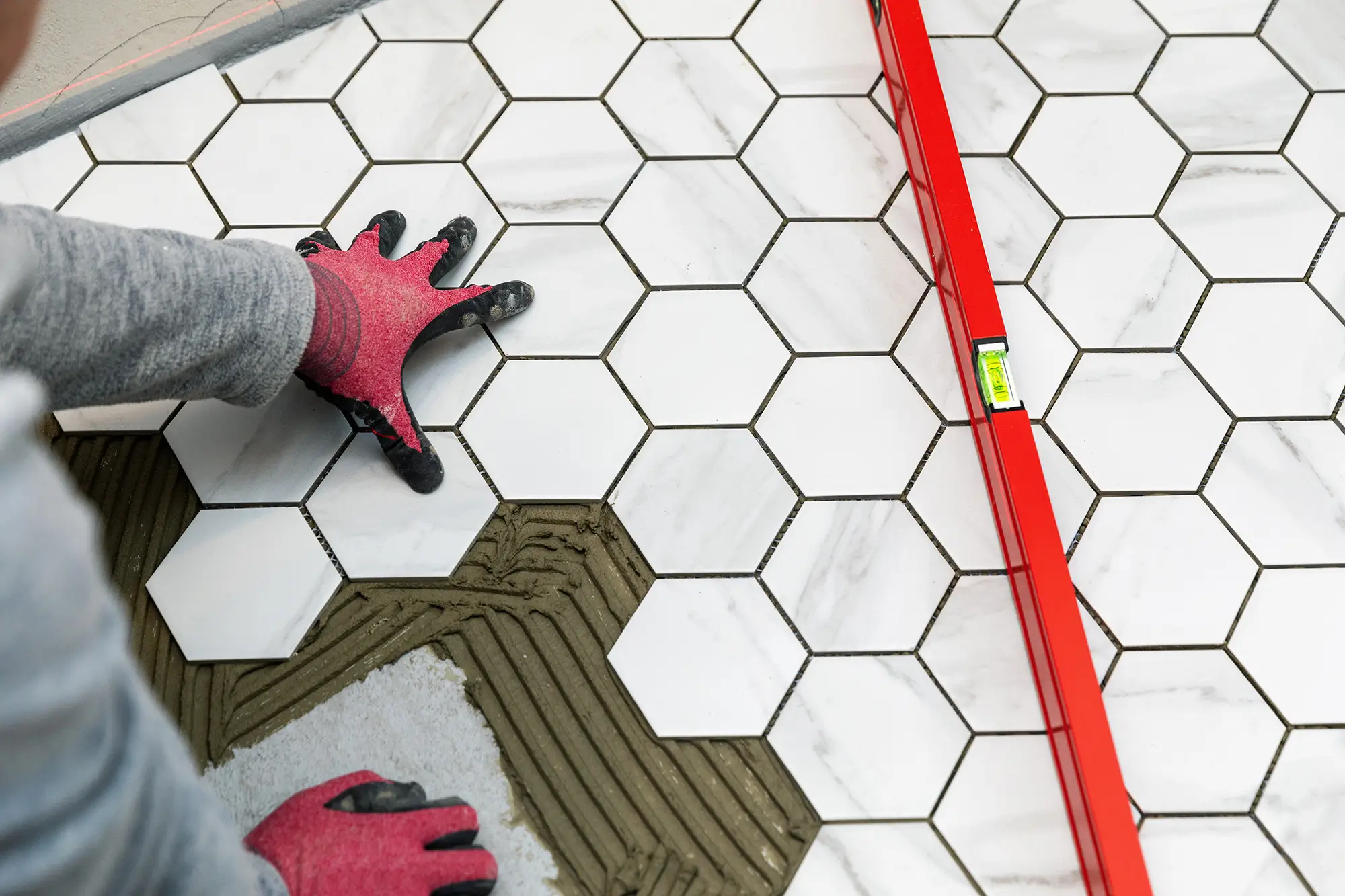
The other kind is electric, and that’s what almost everyone means. A thin heating cable comes pre-spaced on a mesh mat. We roll it out over the subfloor, bed it in thinset, and set the tile on top. A thermostat goes on the wall with a temperature sensor threaded into the floor next to the cable. That’s the whole system. There’s nothing to service, no filter, no pump.
What it costs in an Issaquah bathroom
The number that surprises people is how little of the floor actually gets heated. You don’t run cable under the vanity, under the toilet, or inside the tub footprint. So a bathroom with 50 square feet of tile might only have 28 or 30 square feet of heat in it.
Here’s roughly how the add-on breaks down on a typical Issaquah primary bath:
| Line item | Typical range |
|---|---|
| Heating mat or cable (25–35 sq ft) | $350 – $650 |
| Programmable floor thermostat | $180 – $320 |
| Dedicated circuit and GFCI protection | $300 – $700 |
| Uncoupling membrane, if the floor needs it | $150 – $350 |
| Extra labor, testing, and thinset | $250 – $600 |
| Total added to the remodel | $1,200 – $2,600 |
The circuit is the line that moves the most. If your panel is in the garage directly below the bathroom and has a free slot, it’s cheap. If it’s a full panel in a 1970s Olde Town house and the electrician has to fish a home run across the building, that number climbs fast. We look at the panel before we quote heated floors, not after.
For how this fits into a larger budget, we broke down the full picture in what a home remodel costs in Issaquah in 2026.
What it costs to run
A heating mat draws about 12 watts per square foot. Thirty square feet of it is roughly 360 watts, which is less than a hair dryer on low.
Run that six hours a day on a programmable schedule, at Puget Sound Energy residential rates, and you’re looking at single digits per month through the cold half of the year. Turn it on and leave it on all winter and you’ll roughly double that, but you’d also be heating a floor at 2 a.m. for no reason.
The thermostat matters more than the mat here. Get one with a real schedule, set it to come on forty minutes before your alarm and shut off after the morning rush, and the running cost stops being a conversation.
The permit part that nobody mentions
Electric floor heat is electrical work, and in Washington that means a permit and an inspection. This isn’t a formality anyone skips. The state’s rules are laid out on L&I’s page covering electrical permits, fees, and inspections, and the short version is that the licensed electrical contractor doing the work has to pull their own permit.
One wrinkle worth knowing: some cities run their own electrical inspections instead of L&I, so the correct jurisdiction depends on where the jobsite sits. We confirm that before anyone buys a permit rather than assuming.
The inspection also has to happen before the work gets covered. On a heated floor, “covered” means before the tile goes down. If a contractor tiles over an uninspected heating cable and hopes nobody notices, that’s a problem you inherit at closing when a buyer’s inspector asks for the permit history. We pull permits and handle inspections on every job, heated floors included.
Where it’s worth it in Issaquah, and where it isn’t
Basement bathrooms are the strongest case I know of. Concrete slab sits at ground temperature year round, and around here that’s cold in a way that doesn’t care what your furnace is doing. A heated floor in a finished basement bath changes the room more than any other thousand dollars you could spend down there.
Older houses in Olde Town and around Squak Mountain are the second best case, but with a caveat. If there’s an unconditioned crawlspace under the bathroom and the joist bays have no insulation, the heat is going to leak straight down. Insulate underneath first. Otherwise you’re paying to warm the dirt.
Newer builds in the Highlands, Talus, and out toward Klahanie usually have a tighter envelope already, and the floor heat is genuinely more of a comfort item than a fix. Still nice. Just be honest with yourself that it’s a luxury in that context, not a repair.
Where I talk people out of it: guest baths that get used four times a year, powder rooms with no shower, and any project where the budget is tight and the ventilation is still bad. If your bathroom fan is undersized and you’re seeing moisture on the walls, spend the money there. A warm floor in a damp bathroom is a nicer place to have a mold problem.
If you’re weighing this against other upgrades before a sale, we ranked the options in the best ROI remodels for Issaquah homes before you sell. Heated floors don’t top that list. They’re something you buy for yourself.
Two things people don’t find out until it’s too late
Floor height. The mat, thinset, and tile stack up to somewhere around half an inch above what a plain tile floor would be. Usually fine. It stops being fine at the doorway, where you now have a lip into the hallway, and it matters a lot if you’re also doing a curbless shower, where the whole point is that the floor stays flat. Both are solvable, but they have to be solved on paper before demo, not discovered on tile day.
The other one is testing. We measure the resistance of the heating cable three times: out of the box, after it’s fastened down, and again after the tile is set. If a screw goes through the cable at some point, that reading tells us when it happened and roughly where. Contractors who skip this find out the floor doesn’t work after the grout has cured, which is a bad afternoon for everybody. Ask whoever you hire whether they ohm test. The answer tells you a lot.
Issaquah heated floor FAQs
Can heated floors be added without replacing the tile?
No. The heating element sits under the tile in the thinset layer, so the existing floor has to come out. This is why we bring it up during planning for any bathroom remodel in Issaquah rather than after.
Will it heat the whole bathroom?
It takes the chill out of the room and makes the floor comfortable barefoot. In most Washington bathrooms it isn’t a replacement for your primary heat source, and I’d be careful with anyone who tells you it is.
Does it work under any tile?
Porcelain, ceramic, and natural stone are all fine, and stone actually holds the heat well. Luxury vinyl and engineered wood depend entirely on the manufacturer’s temperature rating, so check the warranty before assuming.
How long does a heated floor last?
The cable itself is typically rated for decades and has no moving parts. Thermostats are the part that eventually fails, and replacing one is a wall-level job, not a floor-level one.
Does it need its own circuit?
Usually yes, with GFCI protection. Small systems can sometimes share, but the electrician makes that call based on the load and your panel.
Do you need a permit for heated floors in Issaquah?
Yes. Electrical work requires a permit and an inspection before the tile covers it. We handle permits and inspections as part of the job.
Talk to us before you tile
If you’re planning a bathroom remodel in Issaquah and heated floors are on your maybe list, the time to decide is during design, while the electrician is still figuring out the circuits. Once the tile is down, adding it means doing the floor twice.
Come look at our recent projects, or request a quote and we’ll walk your bathroom, check your panel, and give you a real number instead of a range. And once the floor is in, here’s how to keep the tile looking right.
About the author
Vasile Teterea is the owner of Firm Remodeling LLC, a licensed residential contractor working across Issaquah and King County. Firm Remodeling handles bathroom, kitchen, and basement remodels, full home renovations, and tile installation, and follows the EPA’s lead-safe RRP rules on homes built before 1978.
Firm Remodeling LLC 26424 233rd Ave SE, Maple Valley, WA 98038 Phone: (206) 773-8264 Email: firmremodeling@gmail.com License #: FIRMRRL783PU Serving Issaquah, Sammamish, Newcastle, Renton, Kent, Maple Valley, Covington, Black Diamond, and Hobart, WA.
